.jpg.opt241x311o0,0s241x311.jpg) |
Recover Forgotten Fruit! The Milwaukee Apple—just one of hundreds of endangered fruits that have disappeared from our plates and have been replaced by fewer than a dozen commercial varieties. Slow Food WiSE joins the handful of orchardists and chefs who are bringing antique apples back to our tables by adopting the Milwaukee Apple. Read about our Apple Project on the Slow Food USA Blog!
Slow
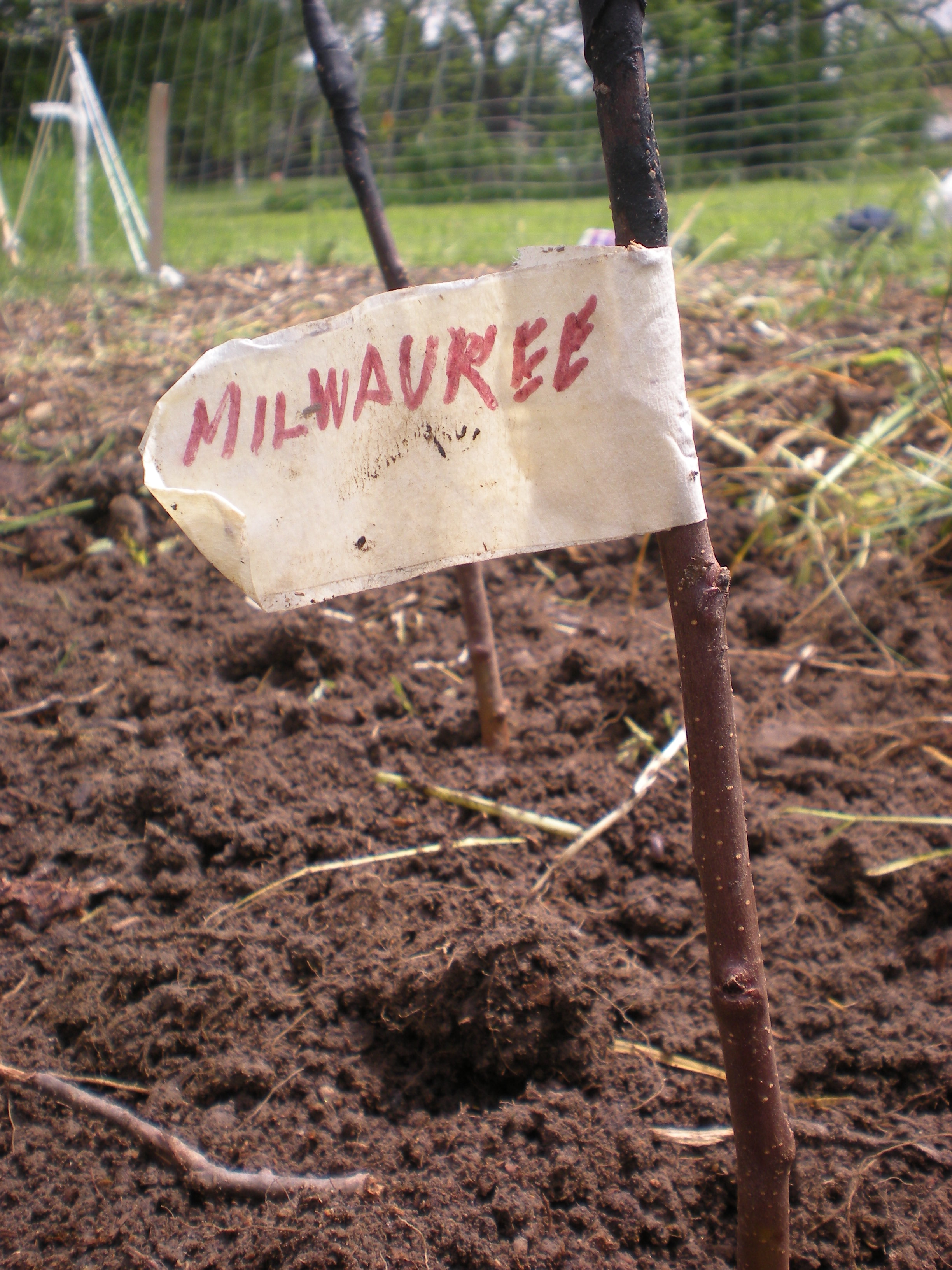
Food WiSE has planted 5 Milwaukee Apple Trees in Milwaukee County over the past two years. 4 trees, along with Pewaukee
and Oneida Apple varietials, were in the spring of 2010 at the Historic Stahl Conrad
Homestead in Hale’s Corners to bring this fruit back to our region. There
is just one known Milwaukee Apple tree within the city limits—along with a
group of youth and volunteers, Slow Food WiSE planted a bench graft Milwaukee
apple tree in The Urban Ecology Center’s Washington Park fruit orchard. In 2012--we are bringing Milwaukee, Pewaukee, Oneida, Bonnie's Best, Wolf River--all apple varietals with roots in Wisconisn--to backyard growers.
Milwaukee Apple Description: This seedling apple was found under a Duchess tree and then developed by George Jeffrey of Milwaukee, WI. It appeared in commerce around 1899. Its tough but thin skin is greenish yellow and marbled, dotted or blotched with reds. Its yellowish white flesh is tender and juicy, with a pleasant acid flavor good for most uses except as a fresh dessert apple. –Renewing America’s Food Traditions Alliance, Forgotten Fruits of the Great Lakes Region Project You can help recover forgotten fruits! Support Antique Apple Growers & Producers: · Weston Antique Apples New Berlin, WI · Brightonwoods Orchard Burlington, WI · Appel Treow Winery Burlington, WI · Maple Valley Orchards & Nursery Gillett, WI Grow your own Antique Apple Trees: · Weston’s Antique Apple’s Classes · Wisconsin Apple Growers Association · Center for Integrated Agricultural Systems ·
Maple Valley Orchards & Nursery
|